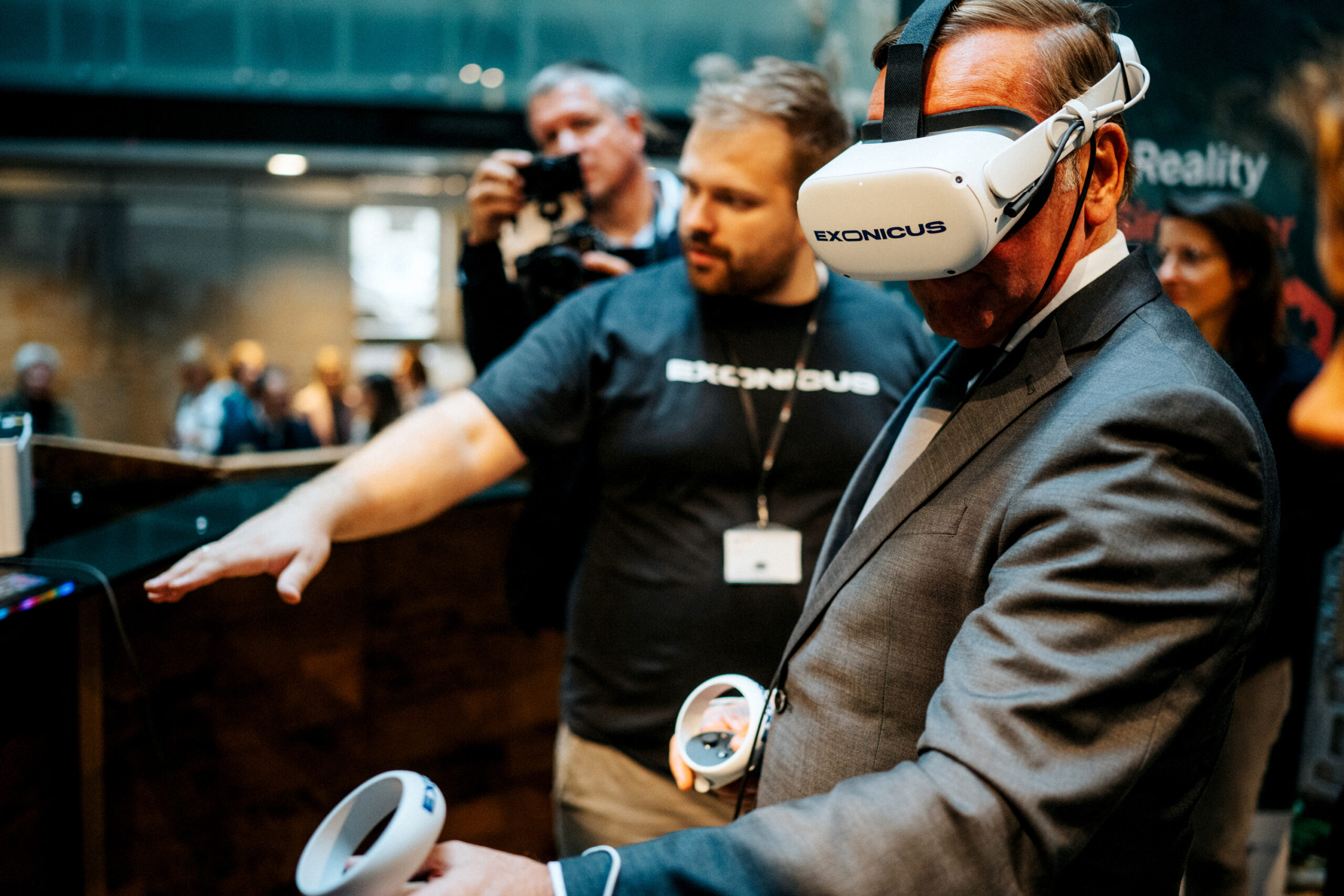
Immersive simulation training offers significant advantages in medical education, but also presents some limitations.
Strengths of immersive simulation training in medical education:
- Provides a safe, controlled environment for practicing clinical and procedural skills without risk to patients.[1][2][3]
- Enhances learner engagement, satisfaction, and self-efficacy compared to traditional methods.[4][5][6]
- Supports development of non-technical skills such as teamwork, communication, and decision-making.[1][7][2]
- Allows for repeated practice, immediate feedback, and structured debriefing, which improve skill acquisition and error reduction.[1][2][3]
- Demonstrates superior long-term knowledge retention and competency, especially in high-stakes scenarios like emergency medicine.[5][8]
- Scalable for large groups and adaptable to various learning strategies and clinical scenarios.[5][9][3]
- Facilitates individualized learning and standardized assessment through automated feedback and analytics.[9][3]
Weaknesses of immersive simulation training in medical education:
- Requires a financial investment, specialized equipment, and faculty training.[1][7][3]
- Not all learners benefit equally; some may experience simulation sickness or discomfort, though rates are low.[5]
- Realism and transferability of skills to actual clinical settings might be limited[1][7][10]
- Knowledge gains are often equivalent to traditional methods; main advantages are improved engagement and retention.[4][8]
- Organizational and logistical barriers exist, including integration into curricula and ensuring psychological safety.[1][10][3]
- Implementation can be challenging in resource-limited settings and may not suit all educational contexts.[1][11][3]
In summary, immersive simulation training is a powerful adjunct to traditional education, offering enhanced engagement, skill development, and safety, but requires careful consideration of cost, implementation logistics, and learner variability.[1][4][7][2][5][8][9][10][6][3] Overall, careful consideration of your specific training objectives can help determine what solutions might be best suited for your organization.
References
- The Impact of Simulation-Based Training in Medical Education: A Review. Elendu C, Amaechi DC, Okatta AU, et al. Medicine. 2024;103(27):e38813. doi:10.1097/MD.0000000000038813.
- Features and Uses of High-Fidelity Medical Simulations That Lead to Effective Learning: A BEME Systematic Review. Issenberg SB, McGaghie WC, Petrusa ER, Lee Gordon D, Scalese RJ. Medical Teacher. 2005;27(1):10-28. doi:10.1080/01421590500046924.
- Simulation in Healthcare Education: A Best Evidence Practical Guide. AMEE Guide No. 82. Motola I, Devine LA, Chung HS, Sullivan JE, Issenberg SB. Medical Teacher. 2013;35(10):e1511-30. doi:10.3109/0142159X.2013.818632.
- Learning Outcomes of Immersive Technologies in Health Care Student Education: Systematic Review of the Literature. Ryan GV, Callaghan S, Rafferty A, et al. Journal of Medical Internet Research. 2022;24(2):e30082. doi:10.2196/30082.
- Immersive Medical Training: A Comprehensive Longitudinal Study of Extended Reality in Emergency Scenarios for Large Student Groups. Einloft J, Meyer HL, Bedenbender S, et al. BMC Medical Education. 2024;24(1):978. doi:10.1186/s12909-024-05957-3.
- A Comparative Case Study of 2D, 3D and Immersive-Virtual-Reality Applications for Healthcare Education. López Chávez O, Rodríguez LF, Gutierrez-Garcia JO. International Journal of Medical Informatics. 2020;141:104226. doi:10.1016/j.ijmedinf.2020.104226.
- Pro-Con Debate: Virtual Reality Compared to Augmented Reality for Medical Simulation. Caruso TJ, Rama A, Uribe-Marquez S, Mitchell JD. Anesthesia and Analgesia. 2025;140(6):1264-1272. doi:10.1213/ANE.0000000000007057.
- Knowledge Gain and the Impact of Stress in a Fully Immersive Virtual Reality-Based Medical Emergencies Training With Automated Feedback: Randomized Controlled Trial. Lindner M, Leutritz T, Backhaus J, König S, Mühling T. Journal of Medical Internet Research. 2025;27:e67412. doi:10.2196/67412.
- Metaverse-Based Simulation: A Scoping Review of Charting Medical Education Over the Last Two Decades in the Lens of the 'Marvelous Medical Education Machine'. Popov V, Mateju N, Jeske C, Lewis KO. Annals of Medicine. 2024;56(1):2424450. doi:10.1080/07853890.2024.2424450.
- Design of Simulation-Based Medical Education and Advantages and Disadvantages of in Situ Simulation Versus Off-Site Simulation. Sørensen JL, Østergaard D, LeBlanc V, et al. BMC Medical Education. 2017;17(1):20. doi:10.1186/s12909-016-0838-3.
- Trends and Innovations of Simulation for Twenty First Century Medical Education. Herrera-Aliaga E, Estrada LD. Frontiers in Public Health. 2022;10:619769. doi:10.3389/fpubh.2022.619769.