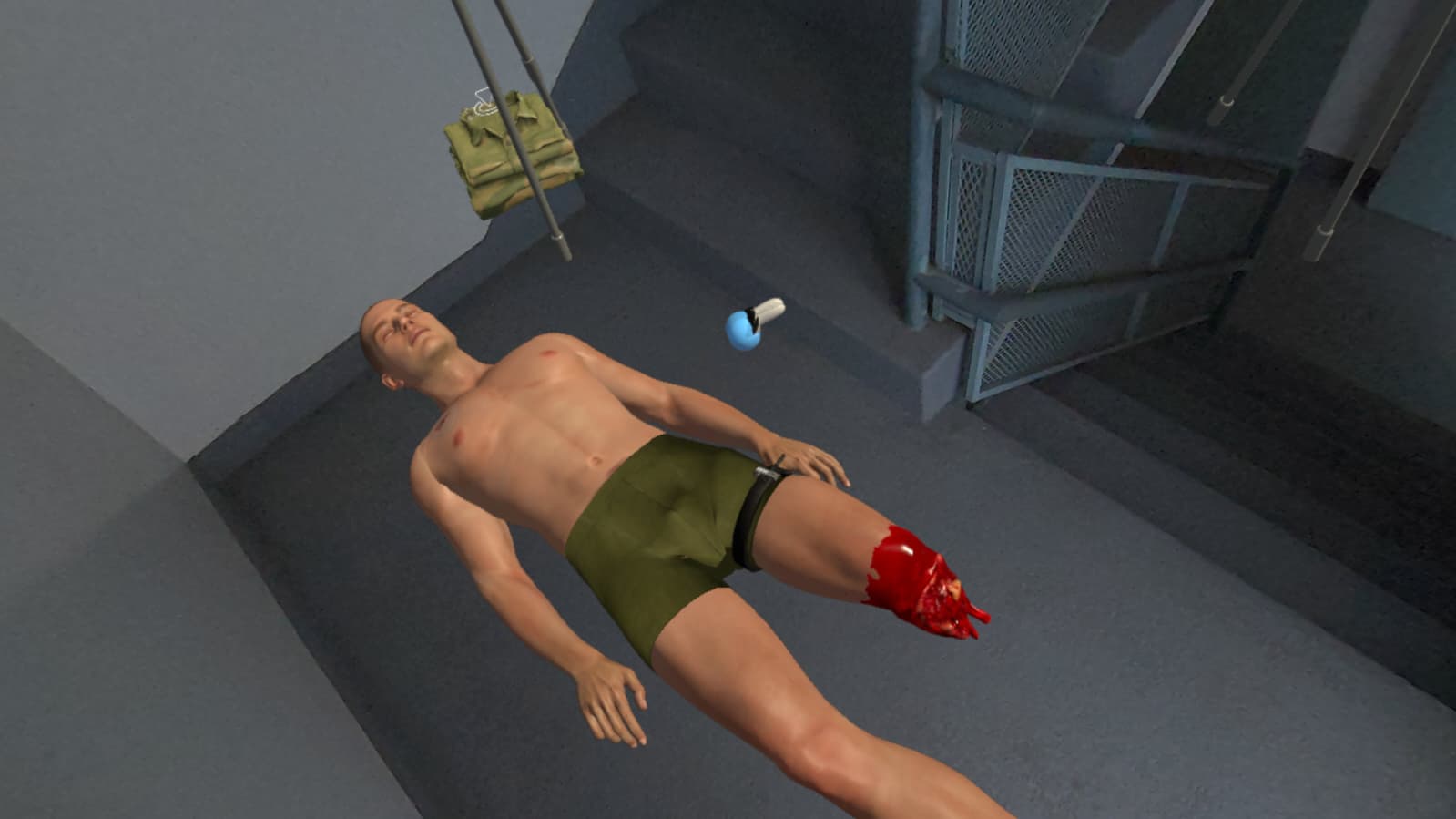
This is the first scenario in the Tier 2/Combat Life Saver curriculum pack. The following scenarios will provide training on additional TCCC at the Tier 2 Level. There are new interventions in the Airway, Respirations, Circulation, Head Injury, Hypothermia, and Fracture portions of TCCC. Additionally, Tier 2 introduces you to new medications that can be used for pain as well as infection prevention and treatment. We will proceed sequentially through MARCH.
Tier 2 Airway Treatments (NPA): You are in a SAFE and SECURE location – The primary learning objective is to show you a more advanced way to treat an airway obstruction using a nasopharyngeal (NPA) airway device. The estimated time to complete this scenario is 5 minutes. This scenario occurs in the Tactical Field Care Phase. Equipment Available: Combat Life Saver Pack. Evacuation/Disposition is possible through the tablet. Selecting the patient’s disposition will end the exercise.
Patient: Can you tell me your name?
Response: This patient's breathing is noisy and they are having difficulty talking
Location: Head
Patient: Do you feel any pain?
Response: This patient's breathing is noisy and they are having difficulty talking
Location: Head
Patient: Do you have any medical problems?
Response: This patient's breathing is noisy and they are having difficulty talking
Location: Head
Patient: Do you have any allergies?
Response: This patient's breathing is noisy and they are having difficulty talking
Location: Head
Patient: Do you take any medications?
Response: This patient's breathing is noisy and they are having difficulty talking
Location: Head
Patient: Are you feeling dizzy or confused?
Response: This patient's breathing is noisy and they are having difficulty talking
Location: Head
Patient: Are you having trouble breathing?
Response: This patient's breathing is noisy and they are having difficulty talking
Location: Head
Patient: Can you see clearly?
Response: This patient's breathing is noisy and they are having difficulty talking
Location: Head
Patient: Do you feel any swelling in your throat?
Response: This patient's breathing is noisy and they are having difficulty talking
Location: Head
Patient: Are your lips or tongue swollen?
Response: This patient's breathing is noisy and they are having difficulty talking
Location: Head
Patient: Is your voice hoarse or different?
Response: This patient's breathing is noisy and they are having difficulty talking
Location: Head
Patient: Do you remember what happened?
Response: This patient's breathing is noisy and they are having difficulty talking
Location: Head
After placing a cricothyroidotomy it is appropriate to consider confirming placement with assisted breaths and end tidal CO2 however this is not currently possible in this simulator. The patient can only be bagged through facial mask placement. The procedure does clear the airway. Overall the same physiologic impact is achieved.
If you are placing this device for a suspected pelvic fracture, it is often suggested to also tape the patients ankles. That is not currently possible in this simulator.
If you are placing this device for a suspected pelvic fracture, it is often suggested to also tape the patients ankles. That is not currently possible in this simulator.
If you are placing this device for a suspected pelvic fracture, it is often suggested to also tape the patients ankles. That is not currently possible in this simulator.
The system currently does not allow you to give this medication slowly in real life you would give over 5 to 10 minutes
Airway: Jaw thrust maneuver
Airway: Jaw thrust maneuver
Roll patient into recovery position
Airway: Place Nasopharyngeal Airway
Patient disposition: Medical Evacuation