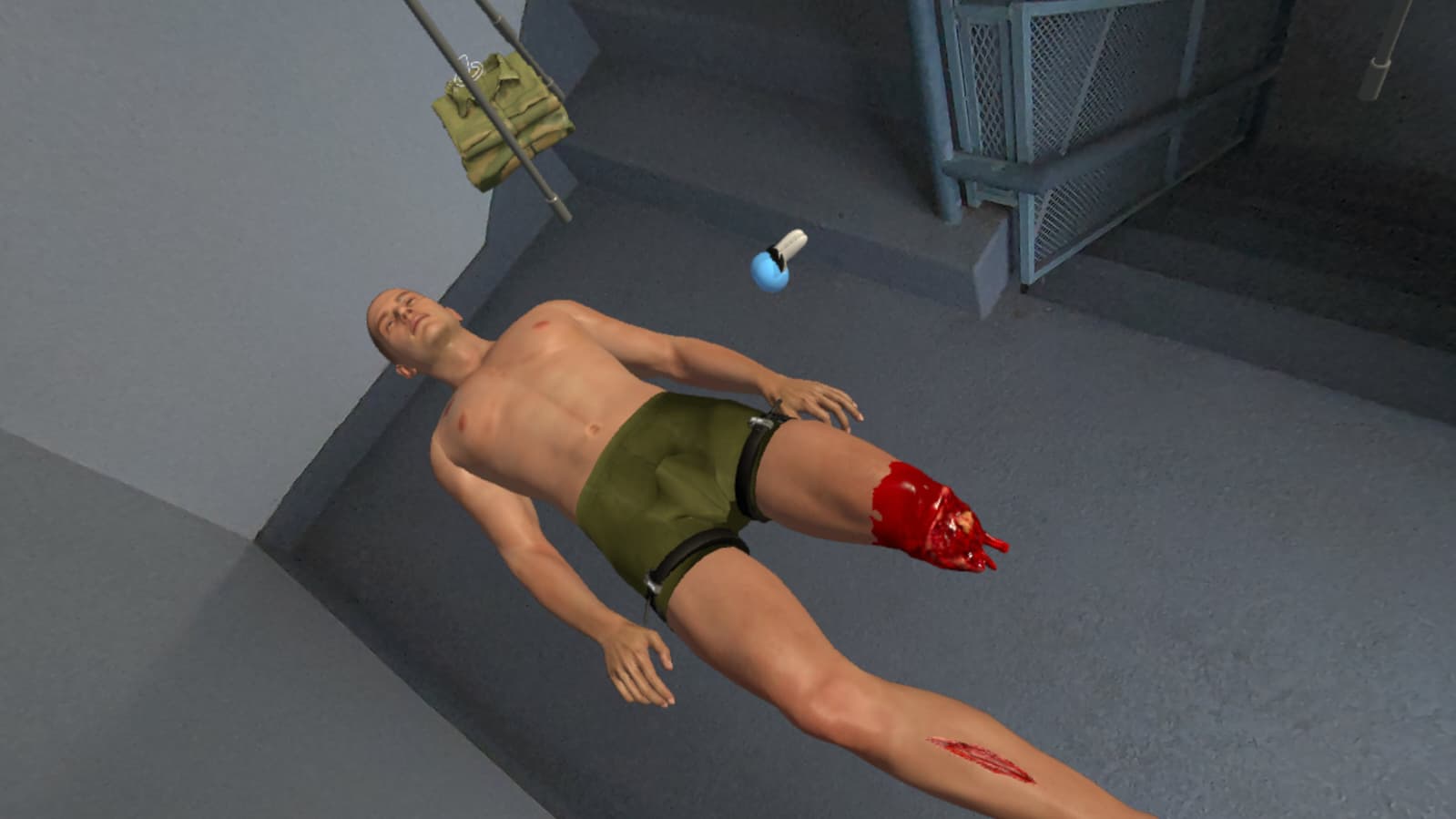
Tier 2 Pain Management Part 2: You are in a SAFE and SECURE location – The primary learning objective of this scenario is to review the basics of pain management and to cover the medication Meloxicam. The estimated time to complete this scenario is 5 minutes. This scenario occurs in the Tactical Field Care Phase. Equipment Available: Combat Life Saver Pack. Evacuation/Disposition is possible through the tablet. Selecting the patient’s disposition will end the exercise.
Patient Communication
Patient: Can you tell me your name?
Response: I think it's Robert?
Location: Head
Patient: Do you remember what happened?
Response: There was an explosion. Everyone ran.
Location: Head
Patient: Do you feel any pain?
Response: Yes. I hit the ground.
Location: Head
Patient: Do you have any medical problems?
Response: No. I don't think I have any medical problems.
Location: Head
Patient: Do you have any allergies to medications?
Response: No. I don't have any allergies to medications.
Location: Head
Patient: Do you take any medications?
Response: No. I don't take any medications.
Location: Head
Patient: Are you feeling dizzy or confused?
Response: I'm feeling a little dizzy.
Location: Head
Patient: Are you having trouble breathing?
Response: No. I can breathe normally.
Location: Head
Patient: Can you see clearly?
Response: Yes. I can see clearly.
Location: Head
Patient: Do you feel any swelling in your throat?
Response: No. My throat feels normal.
Location: Head
Patient: Are your lips or tongue swollen?
Response: No. I don't think so.
Location: Head
Patient: Is your voice hoarse or different?
Response: I think it's sounds normal.
Location: Head
Guided Steps
This patient was injured in a blast from a drone attack about 45 minutes ago. Other soldiers eventually placed a tourniquet to a left leg amputation and dragged them to your location.
You already washed your hands, put on your gloves, and did a search for massive hemorrhage, which was normal while noting the functioning tourniquet. The patient's airway is clear. You assessed the patient’s chest and found an open chest wound but no obvious pneumothorax. You placed a chest seal. You tried to take the tourniquet down, but the bleeding resumed. A deliberate lower tourniquet is not possible in this simulator, but is considered to have been done. The patient responds to voice but likely has a mild head injury. You prevented hypothermia and gave acetaminophen.
Next, look through the medication pouch. What medication is the second line treatment for mild to moderate pain at the Tier 2 TCCC level?
If you said Meloxicam, good job! Next we will review several important aspects about this medication.
Informational Step: What Is Meloxicam? Meloxicam is an anti-inflammatory pain medication from the NSAID drug class. Most Combat Wound Medication Packs contain one 15 mg tablet. Unlike aspirin and ibuprofen, meloxicam does not cause prolonged bleeding problems, making it safer for combat use. It reduces both pain and inflammation and lasts for 24 hours with a single dose.
Informational Step: When To Use Meloxicam. Administer meloxicam to casualties with mild to moderate pain. It works well for injuries with inflammation like blast injuries, fractures, sprains, and soft tissue trauma. The casualty must be conscious and able to swallow. Give it together with acetaminophen for best results.
Informational Step: When NOT To Use Meloxicam. Do not give meloxicam if the casualty is allergic to aspirin, ibuprofen, or other NSAIDs. Never use it in casualties with active stomach ulcers, severe kidney disease, or severe liver disease. Ask about NSAID allergies before administering. Do not give to K-9 casualties as NSAIDs are highly toxic to dogs.
Informational Step: How To Give Meloxicam. Have the casualty swallow the 15 mg tablet whole with water. It can be taken with or without food. Check for NSAID allergies first. Encourage the casualty to drink water and stay hydrated, especially in hot environments, to protect the kidneys.
Informational Step: Dosing And Timing. Give 15 mg by mouth once daily. Do not give more than one dose in 24 hours. The medication starts working in thirty to sixty minutes but reaches peak effect in five to six hours. It provides pain relief for 20 to 24 hours. Most medication packs contain only one 15 mg tablet, so additional doses require unit supply.
Informational Step: What To Expect. Meloxicam causes no sedation or mental impairment. The casualty stays alert and combat-ready. When combined with acetaminophen, pain relief begins faster and lasts longer. Mild side effects like stomach upset or mild swelling may occur but are uncommon. The casualty does not need to be disarmed and can continue the mission if otherwise able.
Informational Step: Key Advantages. Meloxicam is the only NSAID in most medication packs because it does not cause prolonged platelet dysfunction like aspirin or ibuprofen. This means it is safe before and during deployment without increasing bleeding risk. The once-daily dosing is ideal for tactical operations. It provides 24-hour pain control with anti-inflammatory benefits and no addiction potential.
Informational Step: Monitoring The Casualty. Reassess pain one to two hours after administration. Ask about stomach pain, nausea, or unusual symptoms. Meloxicam works slower than acetaminophen but provides longer-lasting relief. If pain persists after two hours, consider escalating to other medications available at higher TCCC tiers. Monitor hydration status, especially in hot climates, to protect kidney function.
Informational Step: Documentation Requirements. Document on the TCCC Card in the MEDS section: Meloxicam 15 mg PO with the time of administration. Record the time carefully because meloxicam is only given once every 24 hours. Clear documentation prevents repeat dosing too soon and informs receiving facilities.
Informational Step: Common Mistakes To Avoid. Never give meloxicam to casualties with aspirin or ibuprofen allergies. Do not repeat the dose before 24 hours have elapsed. Avoid giving to severely dehydrated casualties without addressing hydration first. Do not administer to K-9 casualties. Remember that meloxicam takes longer to work, so give it early and combine it with acetaminophen.
Next, ask the patient if they have any allergies to medications.
Next, give the patient the appropriate dose of Meloxicam by picking up the tablet, placing near the patients mouth and pulling the [TRIGGER].
Pick up the TCCC card to document the Meloxicam dose you adminstered to the patient.
This concludes your scenario. Next, open your tablet [X], select the disposition tab, and select Medical Evacuation.