
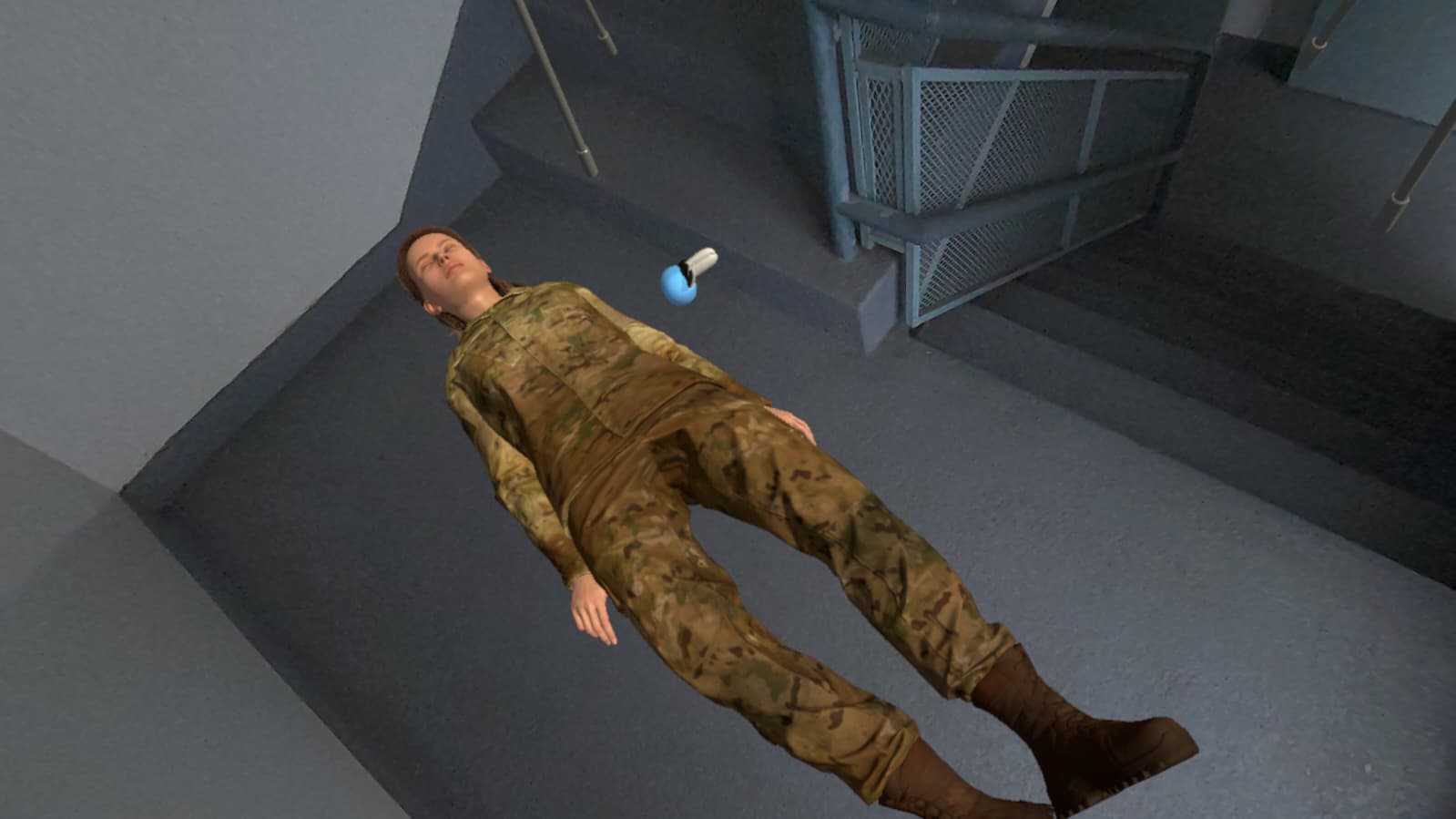
Tier 2 Head Injury and Alert, Verbal, Pain, and Unresponsive (AVPU) Assessment Part 2: You are in a SAFE and SECURE location – The primary learning objective of this (and the next couple of scenarios) is to review the Alert, Verbal, Painful, and Unresponsive (AVPU) assessment. The estimated time to complete this scenario is 5 minutes. This scenario occurs in the Tactical Field Care Phase. Equipment Available: Combat Life Saver Pack. Evacuation/Disposition is possible through the tablet. Selecting the patient’s disposition will end the exercise.
Patient Communication
Patient: Can you tell me your name?
Response: I think it's Robert?
Location: Head
Patient: Do you remember what happened?
Response: There was an explosion. People were screaming so I ran.
Location: Head
Patient: Do you feel any pain?
Response: Yes. My legs are killing me.
Location: Head
Patient: Do you have any medical problems?
Response: No. I don't think I have any medical problems.
Location: Head
Patient: Do you have any allergies?
Response: No. I don't think I have any allergies.
Location: Head
Patient: Do you take any medications?
Response: No. I don'tt hink I take any medications.
Location: Head
Patient: Are you feeling dizzy or confused?
Response: Yeah. I'm not really sure where I am right now.
Location: Head
Patient: Are you having trouble breathing?
Response: No. I think I can breathe normally.
Location: Head
Patient: Can you see clearly?
Response: For the most part yes.
Location: Head
Patient: Do you feel any swelling in your throat?
Response: No. I don't think so.
Location: Head
Patient: Are your lips or tongue swollen?
Response: No. My lips is normal.
Location: Head
Patient: Is your voice hoarse or different?
Response: I think it sounds normal.
Location: Head
Scoring Details
Exam: Ask patient to move right leg
Exam: Ask patient to move left leg
Exam: Ask patient to move right arm
Exam: Ask patient to move left arm
Exam: Ask patient
Patient disposition: Medical Evacuation