
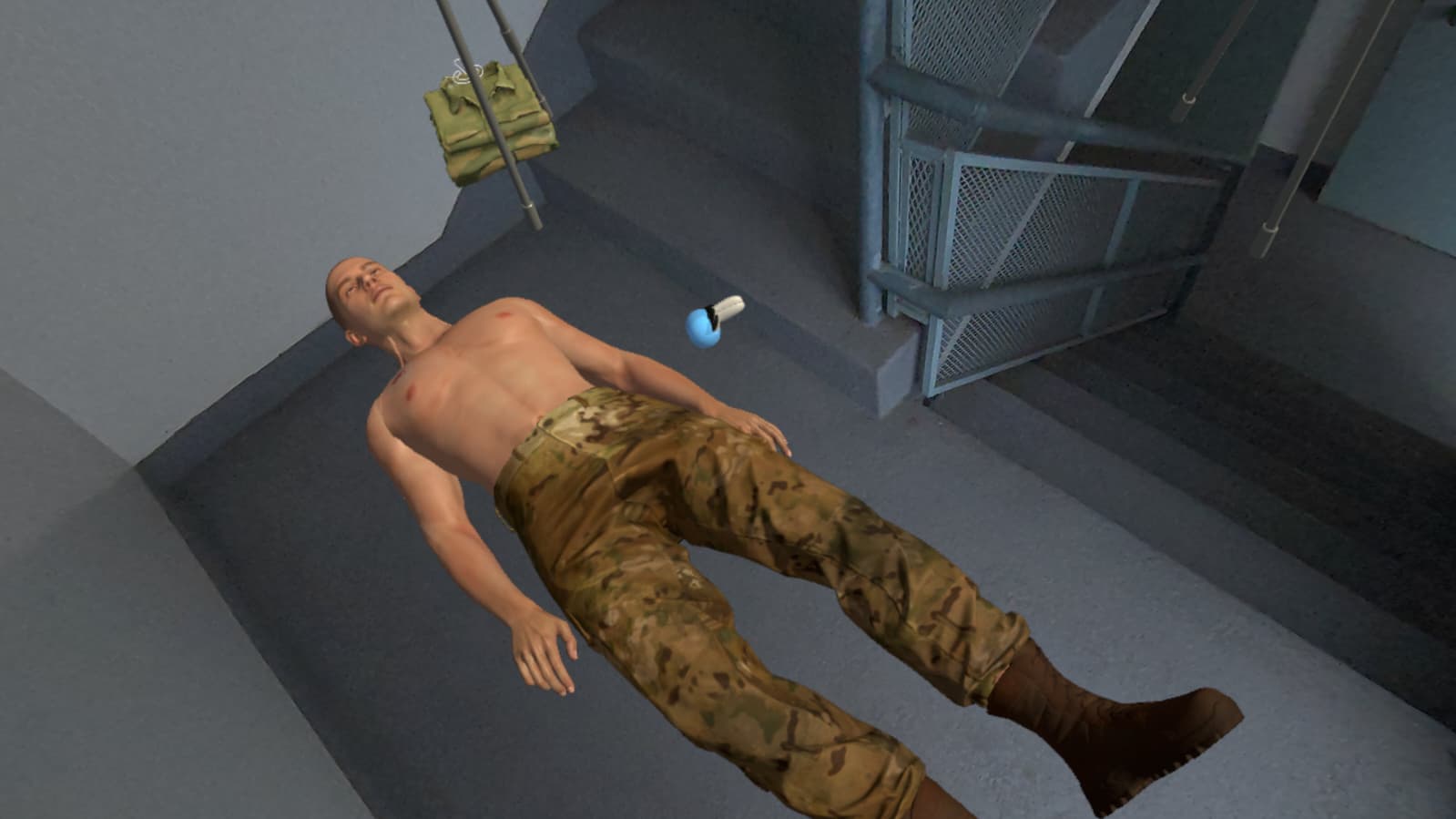
Tier 2 Head Injury and Alert, Verbal, Pain, and Unresponsive (AVPU) Assessment Part 1: You are in a SAFE and SECURE location – The primary learning objective of this (and the next couple of scenarios) is to review the Alert, Verbal, Painful, and Unresponsive (AVPU) assessment. The estimated time to complete this scenario is 5 minutes. This scenario occurs in the Tactical Field Care Phase. Equipment Available: Combat Life Saver Pack. Evacuation/Disposition is possible through the tablet. Selecting the patient’s disposition will end the exercise.
Patient Communication
Patient: Can you tell me your name?
Response: I think its Robert? I can't really remember
Location: Head
Patient: Do you remember what happened?
Response: I think there was an explosion then gunfire and smoke
Location: Head
Patient: Do you feel any pain?
Response: I think I'm ok? I can't tell.
Location: Head
Patient: Do you have any medical problems?
Response: No, I don’t have any medical problems I know of
Location: Head
Patient: Do you have any allergies?
Response: No, I don't have any allergies I know of
Location: Head
Patient: Do you take any medications?
Response: No, I don't take any medications
Location: Head
Patient: Are you feeling dizzy or confused?
Response: Yes. It's hard to focus.
Location: Head
Patient: Are you having trouble breathing?
Response: I can breathe.
Location: Head
Patient: Can you see clearly?
Response: I think it's a little blurry.
Location: Head
Patient: Do you feel any swelling in your throat?
Response: No, I think its okay
Location: Head
Patient: Are your lips or tongue swollen?
Response: No, I think they are okay
Location: Head
Patient: Is your voice hoarse or different?
Response: No, I think it seems the same
Location: Head
Guided Steps
This patient was near a blast from a drone attack about 30 minutes ago, he was really shaken up and walked to your location to get checked out. You already washed your hands, put on your gloves, and did a search for massive hemorrhage, which was normal. The patient's airway is clear. You assessed the patient’s chest and found no injuries. He has a good strong pulse. Next, you need to assess his neurological status.
If you asked the patient a question and asked him to move his arms and legs, good job! If not, please do those things now. This patient is responding to voice, and would be described as ALERT on the AVPU scale.
This concludes your scenario. Next, open your tablet [X], select the disposition tab, and select Medical Evacuation.