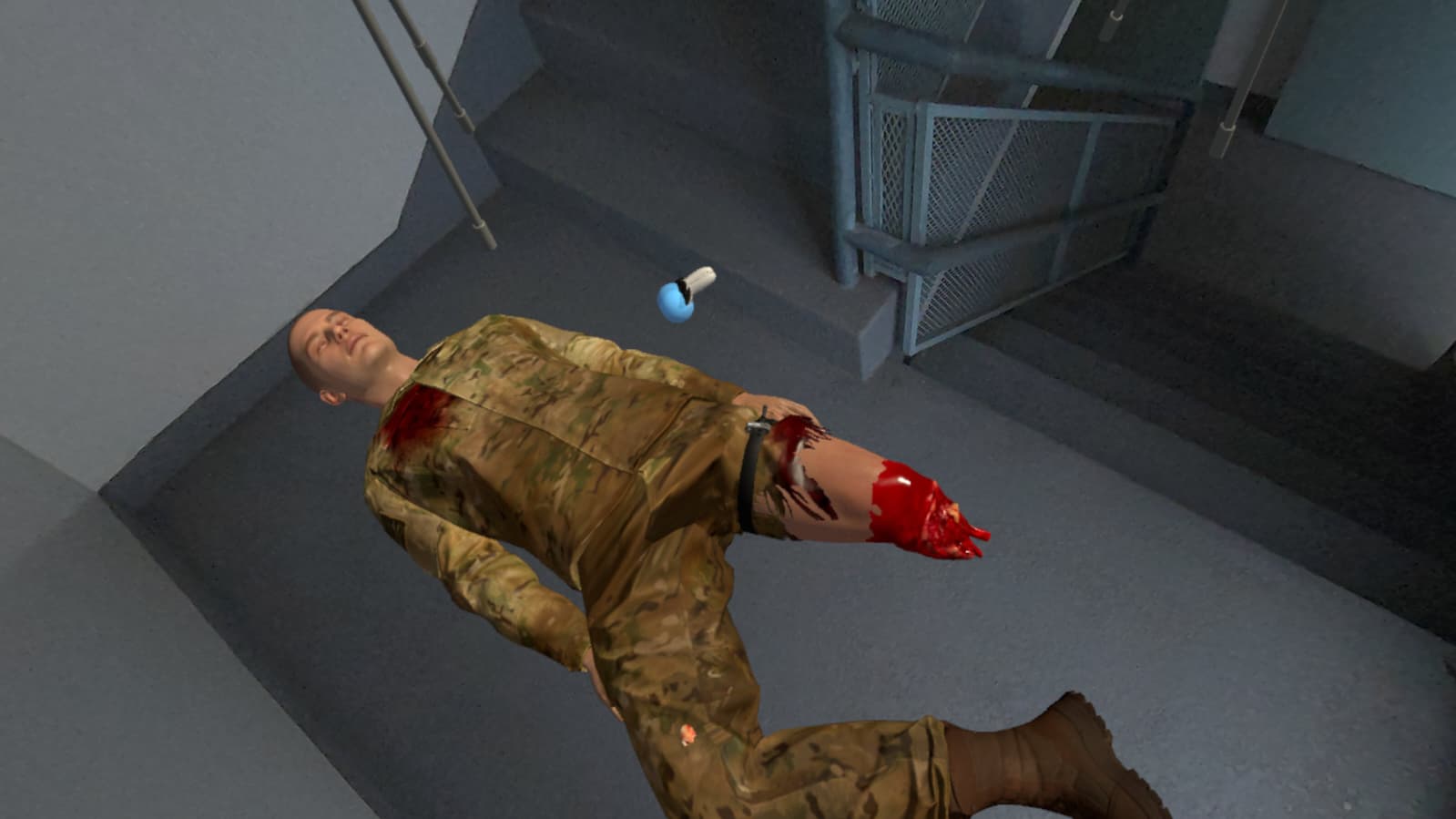
This is the fourth scenario in the Tier 2/Combat Life Saver curriculum pack. The following scenarios will provide training on additional TCCC at the Tier 2 Level. There are new interventions in the Airway, Respirations, Circulation, Head Injury, Hypothermia, and Fracture portions of TCCC. Additionally, Tier 2 introduces you to new medications that can be used for pain as well as infection prevention and treatment. We will proceed sequentially through MARCH.
Tier 2 Respiration Assessments and Treatments: You are in a SAFE and SECURE location – The primary learning objective is to show you how to treat open chest wall injuries that affect respirations. The estimated time to complete this scenario is 5 minutes. This scenario occurs in the Tactical Field Care Phase. Equipment Available: Combat Life Saver Pack. Evacuation/Disposition is possible through the tablet. Selecting the patient’s disposition will end the exercise.
Patient: Can you tell me your name?
Response: The patient is sleepy and looks confused
Location: Head
Patient: Do you remember what happened?
Response: The patient is sleepy and looks confused
Location: Head
Patient: Do you feel any pain?
Response: The patient is sleepy and looks confused
Location: Head
Patient: Do you have any medical problems?
Response: The patient is sleepy and looks confused
Location: Head
Patient: Do you have any allergies?
Response: The patient is sleepy and looks confused
Location: Head
Patient: Do you take any medications?
Response: The patient is sleepy and looks confused
Location: Head
Patient: Are you feeling dizzy or confused?
Response: The patient is sleepy and looks confused
Location: Head
Patient: Are you having trouble breathing?
Response: The patient is sleepy and looks confused
Location: Head
Patient: Can you see clearly?
Response: The patient is sleepy and looks confused
Location: Head
Patient: Do you feel any swelling in your throat?
Response: The patient is sleepy and looks confused
Location: Head
Patient: Are your lips or tongue swollen?
Response: The patient is sleepy and looks confused
Location: Head
Patient: Is your voice hoarse or different?
Response: The patient is sleepy and looks confused
Location: Head
Good job cleaning around the wound.
Exam: Assessment: Remove the patient's shirt
Exam: Assessment: Roll the patient over
Place Chest Seal Back Right
Place Chest Seal Front Right
Patient disposition: Medical Evacuation