010 ASM

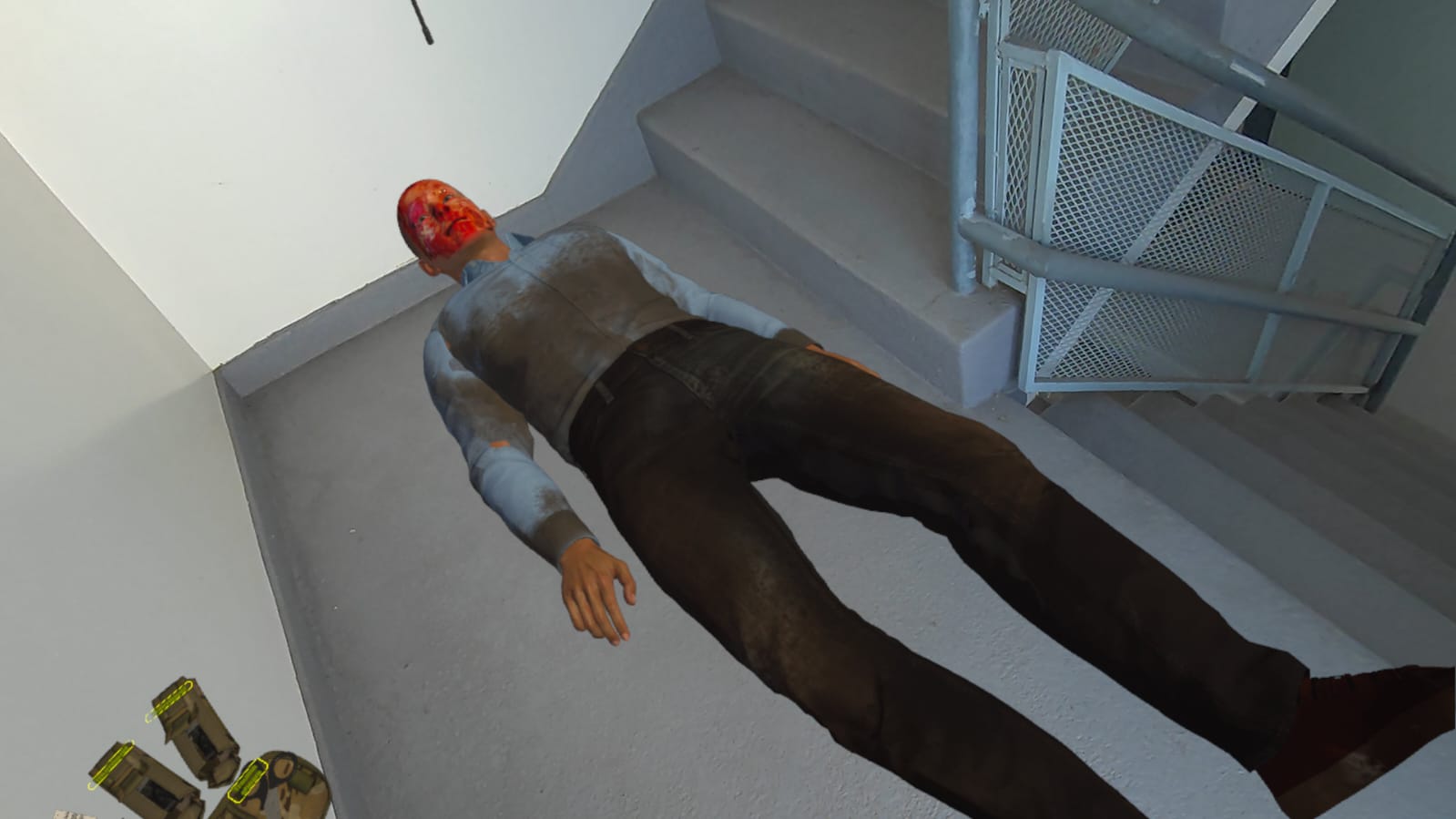
Airway Management Essentials: Mastering Airway Control in TCCC – Tier 1 – You are in a SAFE and SECURE location – The primary learning objective is to describe, review, and practice the full range of Airway management methods: sitting up, rolling over, head-tilt-chin-lift, and we will review what injury characteristics would commonly indicate the need for which type of treatment. Subsequent scenarios will allow you to practice making the decision of which method to use. The estimated time to complete this scenario is 8 minutes. This is your first time taking care of this casualty Ethan Grant. The casualty was near a drone explosion that occurred 4 minutes ago. The massive hemorrhage phase of care has been completed, and the patient has no massive bleeding. You already have personal protective equipment (gloves) on. No other interventions have been performed. This scenario occurs in the Tactical Field Care Phase and covers the M[A]RCH portion(s) of care. Equipment Available: Individualized First Aid Kit (IFAK) U.S Version (x2). Evacuation/Disposition is possible through the tablet. Selecting the patient’s disposition will end the exercise. (This is Scenario 010).

Ongoing Development Disclaimer: In this package wording has not been updated to reflect new functionality to time and date tourniquets or for the non-adhesive burn bandage functionality. Additionally, it is possible other small updates or changes are not reflected in the wording. All grading is set to the current standard described in this package.

Dynamic Physiology Disclaimer:

To obtain the most accurate and effective training experience, we recommend completing each scenario in one uninterrupted session. The virtual patients used in this training are powered by highly realistic physiological models that continuously adjust vital signs and overall condition. The scenarios have been modified to give you time to review instructional materials, and you will not lose points for delays in scenarios with instructional content. However, it is still possible that, depending on your completion pace, the scenario may not progress in perfect alignment with the guided prompts, and for critically injured patients, even moderate delays may result in deterioration or death before the scenario concludes. This is not meant to indicate you did not perform well; rather, it is because of how the high-fidelity engine performs.

Patient Communication

Patient: Hey, I am here to take care of you.
Response: The patient isn't able to speak, but is making high pitched sounds
Location: Head
Patient: Can you tell me your name?
Response: The patient isn't able to speak, but is making high pitched sounds
Location: Head
Patient: What happened?
Response: The patient isn't able to speak, but is making high pitched sounds
Location: Head
Patient: Are you hurting anywhere?
Response: The patient isn't able to speak, but is making high pitched sounds
Location: Head
Patient: Does your throat hurt or feel tight?
Response: The patient isn't able to speak, but is making high pitched sounds
Location: Head
Patient: Are you having a hard time breathing?
Response: The patient isn't able to speak, but is making high pitched sounds
Location: Head
Patient: Does your chest hurt?
Response: The patient isn't able to speak, but is making high pitched sounds
Location: Head
Patient: Did you pass out (lose consciousness)?
Response: The patient isn't able to speak, but is making high pitched sounds
Location: Head
Patient: Do you have any numbness or weakness?
Response: The patient isn't able to speak, but is making high pitched sounds
Location: Head
Patient: Does your head hurt?
Response: The patient isn't able to speak, but is making high pitched sounds
Location: Head
Patient: Does your neck hurt?
Response: The patient isn't able to speak, but is making high pitched sounds
Location: Head
Patient: Does your back hurt?
Response: The patient isn't able to speak, but is making high pitched sounds
Location: Head
Patient: Does your abdomen hurt?
Response: The patient isn't able to speak, but is making high pitched sounds
Location: Head
Patient: Do you have any allergies?
Response: The patient isn't able to speak, but is making high pitched sounds
Location: Head
Patient: Do you take any medications?
Response: The patient isn't able to speak, but is making high pitched sounds
Location: Head
Patient: Do you have any medical problems?
Response: The patient isn't able to speak, but is making high pitched sounds
Location: Head
Patient: Have you ever had any surgeries?
Response: The patient isn't able to speak, but is making high pitched sounds
Location: Head
Patient: When did you last eat or drink something?
Response: The patient isn't able to speak, but is making high pitched sounds
Location: Head
Patient: Do you smoke, drink, or use recreational drugs?
Response: The patient isn't able to speak, but is making high pitched sounds
Location: Head
Patient: I am here to take care of you.
Response: The patient isn't able to speak, but is making high pitched sounds
Location: Head

Guided Steps

This is your first time taking care of Ethan Grant. You are in a secure location. This scenario summarizes Airway management in the MARCH Algorithm during TCCC Tactical Field Care. Ethan has an airway obstruction caused by a flash burn. We will review airway assessment and management slowly for training purposes. This patient’s condition has been adjusted to allow him to survive longer.
Informational Step: An airway obstruction (breathing pipe/trachea is blocked) can kill a patient in as little as 3 to 5 minutes! If a person has an airway obstruction, a few relatively simple interventions can save their life! This starts by being able to tell when an airway obstruction is present, then learning the interventions.
For this scenario, a teammate completed the massive hemorrhage phase of care prior to your arrival. The patient has no massive bleeding. You already have gloves on.
Next, we need to check for an obstruction and assess the patient’s airway by looking at them, trying to talk to them, listening for abnormal airway sounds (bringing your head close to the patient's head to hear their breathing), and looking directly in their mouth by using a jaw thrust (if needed). Do you think this patient has an obstructed airway?
Yes, this patient has evidence of an airway obstruction. The harsh sound you hear every time the patient breathes is ‘stridor’ (which often indicates a tight or obstructed airway), and the patient has injuries that can cause an airway obstruction (facial burn).
Informational Step: For very severe airway obstructions, you may not hear any breathing sounds, and the patient may not be breathing at all.
Informational Step: Next, we will walk through three different ways to manage an airway obstruction: sitting the patient up, performing a head-tilt-chin-lift, and placing the patient in the recovery position. We will perform these interventions in the sequence you would use for a conscious (awake) patient without evidence of a neck injury.
First, help the patient sit up and see if that helps their breathing. Put your hands by their shoulders and pull the [TRIGGERS] to help the patient sit up. Do you think this helped the patient’s airway obstruction?
Yes! The stridor has stopped. In real life, we can count this as completing the ‘Airway’ portion. However, in this scenario, we will evaluate a few other treatment methods.
Next, lay the patient back down (notice the stridor returns), and then perform a head-tilt-chin-lift by placing your hands on the patient’s forehead and chin, pushing the patient’s forehead back while lifting the chin away from the patient's chest. Do you think this helped the patient’s airway obstruction?
Yes! The stridor has stopped. In this scenario, we will evaluate one other method. First, move the patient's head back into a normal (neutral) position by putting your hand back on the patient’s forehead and chin and pulling the [TRIGGERS] (notice the stridor sound returns). Next, put your hands by the patient’s right side, with one hand by the patient's hip and the other by their knee, text should appear saying "roll into recovery position", when it does pull the [TRIGGERS] to roll the patient into the recovery position.
Again, the stridor has stopped. To summarize, if you suspect an airway obstruction, and the patient is conscious, you can try to sit them up. If they are not conscious, you can try a head-tilt-chin-lift or roll them into the recovery position.
Informational Step: Cervical spine (neck) protection on the battlefield is debated. If the patient had a penetrating trauma (gunshot), it is highly unlikely the patient's spine is injured. If the patient had a blunt injury (explosion), it is possible. However, these situations are challenging. Balancing these priorities (airway and spine protection) can be difficult. Ultimately, in the moment, do the best you can.
Next, open your tablet [X], select the disposition tab, and select Medical Evacuation to end this scenario. This concludes this training scenario on Airway Management in Tactical Field Care. After reviewing the feedback panel, exit this simulation and select scenario 011 to continue. 

Scenario Details

Scenario Package
TCCC Tier 1 Curriculum
Learner type
  • militaryMedic
Patient severity at start
Serious
Patient severity overall
Serious
Duration to complete
<5 minutes
Scenario difficulty
Standard
Environment
POI
Equipment
  • Bandage
  • Combat Application Tourniquet (1)
  • Combat Application Tourniquet (2)
  • Trauma Shears
  • Blanket
  • FoilBlanket
  • Nasopharyngeal airway
  • Chest Seal Package
  • Packing Gauze
  • Gloves
  • Eye Guard
  • Non-Adherent Dressing
  • Medication Pouch
  • Radio
  • Marker
  • Triage Tag (Minimal)
Available medications
  • Acetaminophen Pills
  • Moxifloxacin 1 g
  • Meloxicam 15mg
Injury type
  • Facial burn
Pathologies
  • airway obstruction
Scoring details
  • Airway Interventions
  • Disposition