
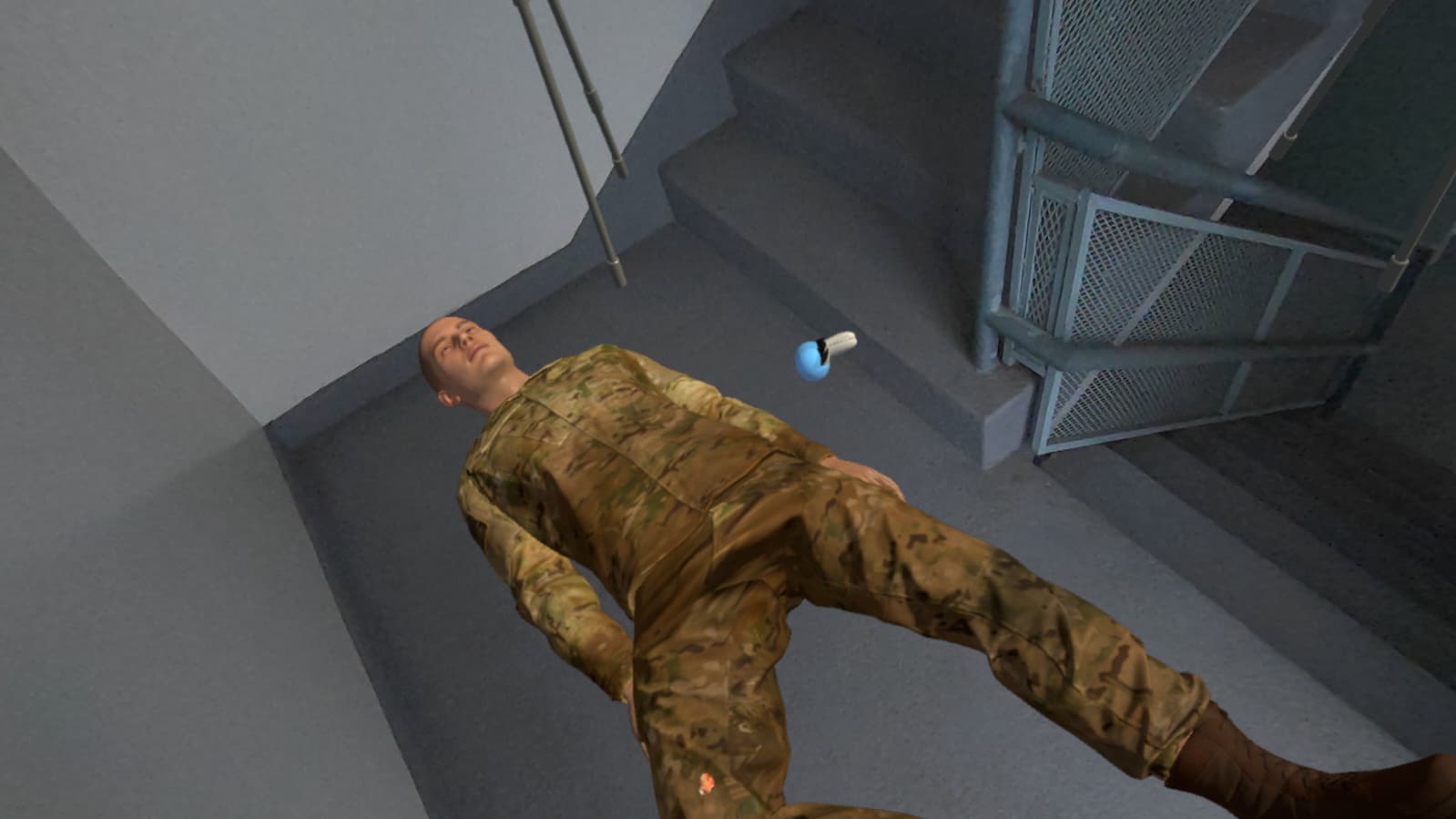
Tier 2 Active Hypothermia Management: You are in a SAFE and SECURE location – The primary learning objective of this scenario is to review hypothermia management methods. The estimated time to complete this scenario is 5 minutes. This scenario occurs in the Tactical Field Care Phase. Equipment Available: Combat Life Saver Pack. Evacuation/Disposition is possible through the tablet. Selecting the patient’s disposition will end the exercise.
Patient Communication
Patient: Can you tell me your name?
Response: The patient only appears to be responding to pain
Location: Head
Patient: Do you remember what happened?
Response: The patient only appears to be responding to pain
Location: Head
Patient: Do you feel any pain?
Response: The patient only appears to be responding to pain
Location: Head
Patient: Do you have any medical problems?
Response: The patient only appears to be responding to pain
Location: Head
Patient: Do you have any allergies?
Response: The patient only appears to be responding to pain
Location: Head
Patient: Do you take any medications?
Response: The patient only appears to be responding to pain
Location: Head
Patient: Are you feeling dizzy or confused?
Response: The patient only appears to be responding to pain
Location: Head
Patient: Are you having trouble breathing?
Response: The patient only appears to be responding to pain
Location: Head
Patient: Can you see clearly?
Response: The patient only appears to be responding to pain
Location: Head
Patient: Do you feel any swelling in your throat?
Response: The patient only appears to be responding to pain
Location: Head
Patient: Are your lips or tongue swollen?
Response: The patient only appears to be responding to pain
Location: Head
Patient: Is your voice hoarse or different?
Response: The patient only appears to be responding to pain
Location: Head
Guided Steps
This patient has the same injuries as the previous scenario, he was injured in a blast from a drone attack about 45 minutes ago. Other soldiers eventually placed the tourniquet and dragged them to your location.
You already washed your hands, put on your gloves, and did a search for massive hemorrhage, which was normal while noting the functioning tourniquet. The patient's airway is clear. You assessed the patient’s chest and found an open chest wound but no obvious pneumothorax. You placed a chest seal. You tried to take the tourniquet down, but the bleeding resumed. A deliberate lower tourniquet is not possible in this simulator, but is considered to have been done. The patient responds to pain only.
Next, perform interventions that would help prevent or treat hypothermia.
If you put the patients clothes back on, and covered them with a blanket, good job! If not, please complete these interventions now.
Informational Step: Other options to treat hypothermia include giving warm fluids through a fluid warmer, or using a secondary device that has active rewarming cells in it. With rewarming cells, be sure they do not come in direct contact with the patient’s skin. Neither of these interventions are currently possible in this simulator.
This concludes your scenario. Next, open your tablet [X], select the disposition tab, and select Medical Evacuation.