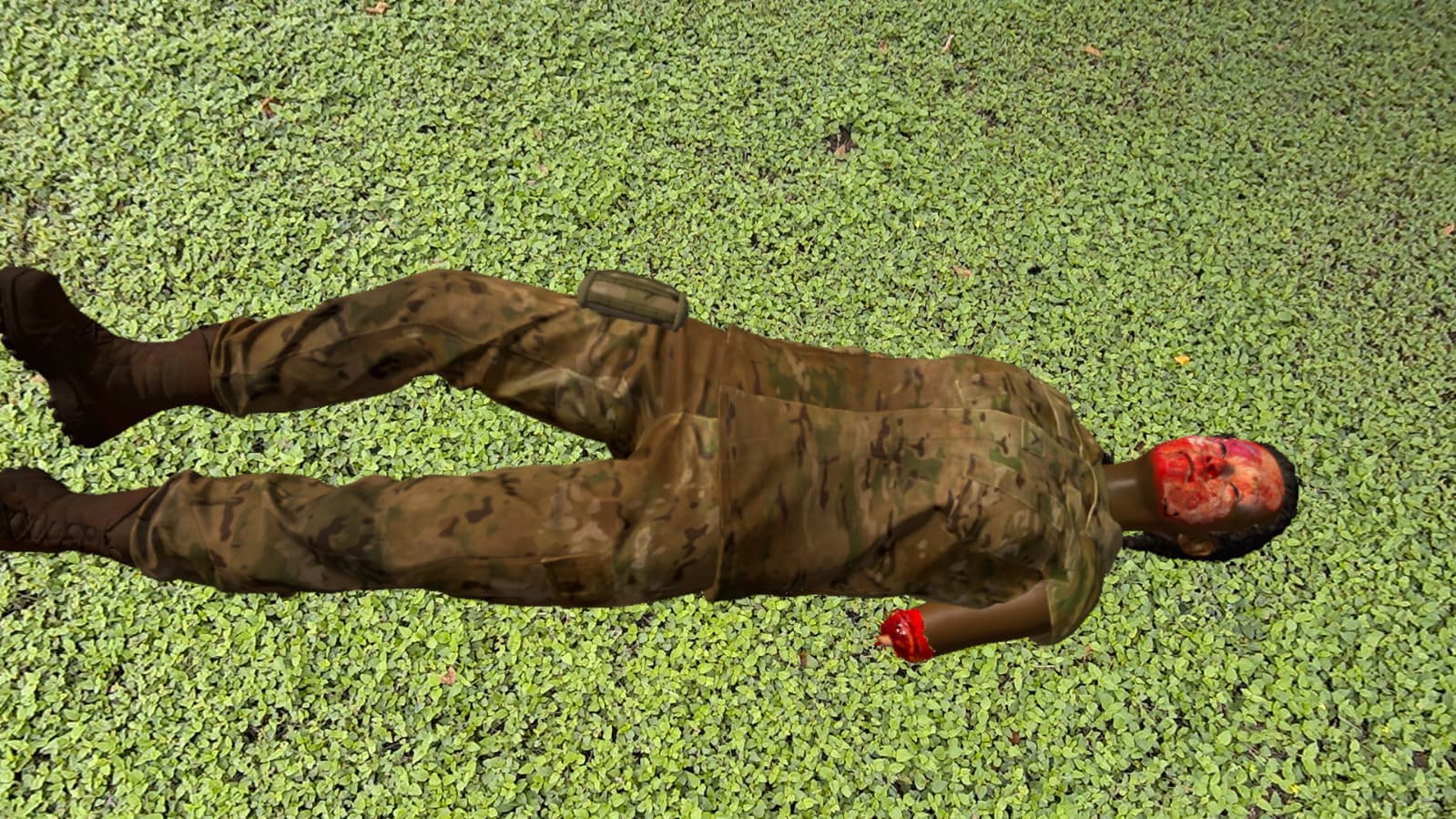
Triage 006

Background: You are deployed near the frontline of a northern combat zone. You are the only person with significant medical training. You have your standard-issue individualized first aid kit. Military service members also have their own individualized first aid kits. You are near a casualty collection point. Field ambulances have been shifted around to various locations and are not currently at the casualty collection point. Field ambulances carry two units of blood, a ventilator, and basic resuscitation medications. There is a well-equipped Role 1 approximately 10 minutes away, and there is a Role 2 with a surgical team about 60 minutes away by ground. You do not have air evacuation options due to a lack of air superiority.

Incident: A large fixed-wing drone just exploded near a group of 30 soldiers! You estimate between 15 and 20 people were injured. The uninjured soldiers have secured the area. You radioed for assistance, and the field ambulances and five additional medics will be here in about 10 minutes. You need to quickly triage the patients based on the Sort-Assess-Life Saving Interventions-Treatment/Transport (SALT) protocol (aligns with standard military triage).

What has already been done: You yelled to the patients, asking them to move and wave, and sorted them into WALKING, WAVING, and NOT MOVING groups. Next, you need to quickly assess the patients to determine what interventions they might need and place the appropriate triage tag. Selecting a disposition in the tablet will end your evaluation of that patient. Then, you will exit that scenario and move on to the next patient. You need to perform this for all 17 patients. Your combined scores and times will be evaluated.

Ongoing Development Disclaimer: In this package wording has not been updated to reflect new functionality to time and date tourniquets or for the non-adhesive burn bandage functionality. Additionally, it is possible other small updates or changes are not reflected in the wording. All grading is set to the current standard described in this package.

Patient Communication

Patient: Hey, I am here to take care of you.
Response: The patient is having a hard time talking
Location: Head
Patient: Can you tell me your name?
Response: The patient is having a hard time talking
Location: Head
Patient: What happened?
Response: The patient is having a hard time talking
Location: Head
Patient: Are you hurting anywhere?
Response: The patient is having a hard time talking
Location: Head
Patient: Does your throat hurt or feel tight?
Response: The patient is having a hard time talking
Location: Head
Patient: Are you having a hard time breathing?
Response: The patient is having a hard time talking
Location: Head
Patient: Does your chest hurt?
Response: The patient is having a hard time talking
Location: Head
Patient: Did you pass out (lose consciousness)?
Response: The patient is having a hard time talking
Location: Head
Patient: Do you have any numbness or weakness?
Response: The patient is having a hard time talking
Location: Head
Patient: Does your head hurt?
Response: The patient is having a hard time talking
Location: Head
Patient: Does your neck hurt?
Response: The patient is having a hard time talking
Location: Head
Patient: Does your back hurt?
Response: The patient is having a hard time talking
Location: Head
Patient: Does your abdomen hurt?
Response: The patient is having a hard time talking
Location: Head
Patient: Do you have any allergies?
Response: The patient is having a hard time talking
Location: Head
Patient: Do you take any medications?
Response: The patient is having a hard time talking
Location: Head
Patient: Do you have any medical problems?
Response: The patient is having a hard time talking
Location: Head
Patient: Have you ever had any surgeries?
Response: The patient is having a hard time talking
Location: Head
Patient: When did you last eat or drink something?
Response: The patient is having a hard time talking
Location: Head
Patient: Do you smoke, drink, or use recreational drugs?
Response: The patient is having a hard time talking
Location: Head
Patient: I'm going to take care of you.
Response: The patient is having a hard time talking
Location: Head

Scenario Details

Scenario Package
Triage Trainer
Learner type
  • preshospital
  • militaryMedic
Patient severity at start
Serious
Patient severity overall
Serious
Duration to complete
<5 minutes
Scenario difficulty
Moderate
Environment
POI
Equipment
  • Bandage
  • Combat Application Tourniquet (1)
  • Combat Application Tourniquet (2)
  • Trauma Shears
  • Blanket
  • FoilBlanket
  • Nasopharyngeal airway
  • Chest Seal Package
  • Packing Gauze
  • Gloves
  • Eye Guard
  • Non-Adherent Dressing
  • Decompression needle
  • Radio
  • Marker
  • Triage Tag (Minimal)
Available medications
  • TXA 1G over 10min
  • Fentanyl 100mcg
  • Epinephrine 1mg
  • Hypertonic Saline
  • Calcium Gluconate 1g
  • Zofran/Ondansetron 4mg
  • Acetaminophen Pills
  • Ketamine 3mg/kg
  • Naloxone 0.4 mg
  • Moxifloxacin 1 g
  • Meloxicam 15mg
  • Ertapenem 1g
  • Epinephrine 0.3mg
  • Diphenhydramine 25mg
  • Methylprednisolone 10mg
Injury type
  • Amputated left leg at knee
  • Amputated right arm
  • Amputated right leg below knee
  • Bruise behind right ear
  • Facial burn
  • Hemorrhage from the ear
Pathologies
  • brain injury, diffuse
  • internal hemorrhage, vena cava
  • external hemorrhage, right arm
  • external hemorrhage, right leg
  • airway obstruction
Scoring details
  • Triage
  • Disposition